-
-GRCR- posted an update 1 month, 1 week ago
PART 1
The day our crime world fell apart was the day Nikolai Romero was arrested.
If Extroit’s new branch of soldiers could catch that sly fox of a leader, there was little hope for younger organizations like ours.
By late November of the year 2000, Uncle Briggs had never looked more concerned. He paced back and forth in his office, his eyes glancing at every entry point—the closed window, the shut door, even his sliding closet doors. He’d murmur about one or two of our own men being carried off, and then stretch and sigh as though it relieved some of the stress from his mind and his back.
“They aren’t coming for us, Uncle.” I said. “We have time.”
He paused and stared at me, his temple pulsing as his jaw clenched. His weathered hands stroked through his ashy brown hair. “We don’t know how much time we have or what they know.”
“Should we move to the safehouse?” Rosalie’s voice was soft, like it always was. She sat next to me—hands clasped in her lap, feet barely touching the floor.
Moving was Uncle’s specialty.
“That would look suspicious.” Evander spun around in Unc’s large office chair. “Let’s move Napa’s disks to the safehouse and stay put. No one knows who the safehouses belong to anyway.”
Uncle waved Evander out of his chair and sat down in it. He stared at the documents on his desk.
Evander sat down on the couch between Rosalie and me. He adjusted the rectangular glasses above his squinty eyes. “Clearly the new military branch is after the organizations like Grey Grounds, who have customers across the borders. That’s why they’ve been deployed in Port Torina first, I’d guess. Romero had thousands of street henchmen working day-in day-out, and I think that makes him a little easier to track.”
The crackling sound of a saxophone solo played from a record player near a large window, where sheer curtains filtered the evening light. Grey Grounds was a narcotics empire that ruled in two countries. We weren’t like that, and maybe that gave our gang, Scarlett, an advantage. We were sporadic, and only worked when our buyers were after specific technological goods.
Uncle steepled his fingers, light glimmering in the diamonds of his large, silver-banded rings. “We’ll finish our deals with Napa and then we’ll pull back. Rosalie, are your emergency bags packed?”
“Yes, Uncle.”
“Good.” Uncle Briggs lifted the papers from his desk and tapped them against the oak surface. He retrieved three thin packets out of his drawer and held them towards me. “Zay, I want you and Thatcher to finish up with Napa. You remember what to do?”
“Yes sir.”
I took the packets and left the meeting. My bedroom wasn’t far from the office, thanks to the fact it was built into Uncle Briggs’s mansion.
Though my room was arguably the smallest in the house, it was undoubtedly the cleanest. When my room was orderly, my brain felt orderly too. I pushed the bedroom door open and walked to my dresser to get the things I’d need.
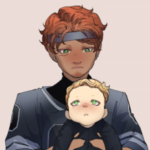
My sock drawer was my secret stash of objects, mostly full of things that didn’t belong there—knives, printed photos of my childhood, a gun, and random cleaning supplies. I loaded what I’d need into my belt and backpack, brushed my thinning ginger hair out of my face and paused a moment in the mirror, running a finger along the scar beneath my eye.
Uncle Briggs said I’d hit my face on a glass table when I was a toddler. The night my parents died.
Hopefully the scar would fade.
I adjusted my headband and slammed the sock drawer shut, slinging my backpack over my shoulder.
Thatcher Young was waiting in the car by the time I got there. The radio fizzled and sputtered as he flipped through the stations—rock, soft rock, pop, pop rock. His voice was as raspy as the music. “We’ll switch cars at the Magpie house.”
Then he pulled off.
Uncle owned many houses across Aponi Sava, each with their own car parked in their garage. Sometimes he let Scarlett members’ families live in them so the neighbors wouldn’t be suspicious. The lights were on when we arrived at the Magpie house, so this must’ve been one of those cases.
Thatcher knocked on the door. He hugged the pregnant woman who answered it and then disappeared inside. We had a code. Look like family or close friends while the doors were open, and exchange keys when the doors were closed. I retrieved the packets from the glove box and slid them into my shirt, then waited quietly in the dark.
The garage door opened. I climbed out of the car and hurried to get into the new one—which, unfortunately, smelled like cigarettes and wet dog. Sometimes I imagine how embarrassed I’d be if we were ever pulled over in a car like this. Removing the packets from my shirt, I tucked them beneath the passenger seat and then slouched back.
Thatcher pulled off before I’d even finished buckling in. “They said Grey Grounds’ 12th sector has met the strong arms of the law.”
“Really?”
He stared at the road ahead. “Yeah.”
“That leaves how many sectors left?” I asked. The star filled sky stretched out above the road. “You’ve known about this soldier thing for a long time, didn’t you, Thatcher?”
The car jittered slightly as Thatcher’s foot pressed harder on the acceleration. “I promised my dad I wouldn’t say anything.”
“You should tell Uncle Briggs what you know. He’s losing his mind.” The city lights drifted by in the distance, the view of them occasionally obscured by those tall cacti and dead looking shrubs that lined the road. “The soldiers are already deployed, there’s nothing you can say now that isn’t headline news.”
“If it’s headline news, you’d better go get a newspaper, man.” Thatcher turned the car down a dark road. It didn’t take us too long to reach our destination from there.
Thatcher and I went into Napa’s bar, my hand on the gun beneath my jacket and backpack slung over my shoulder. Gritty bass and a screaming voice from the live rock band on the other side of the room assaulted our ears, while smoke and perfume, half-dressed women and the darkness crowded our other senses. The building was packed full of people, but the usual Grey Grounds members brawling in the pool table corner were absent.
I bumped into Thatcher as he stopped beside a beam that supported the black metal roof. He tapped a brunette waitress holding a tray and put his hand on his neck. “The music is loud tonight.”
The woman smiled, nodded, and gestured off to a room. “The producer is in the office.”
It didn’t take us long to get to Napa’s office, and he seemed to be waiting for us. Napa sat on the other side of a shiny metal desk with rusted feet. Thatcher stopped in front of him and tilted his head. “We have your order.”
“Oh?” Napa held out his large hands, a bright smile lit his sun-kissed face.
“Give us the payment first.” Thatcher’s voice was gruff.
Napa laughed loudly, then reached into the drawer beneath his desk. He grabbed three, two-inch stacks of hundred dollar bills wrapped in a crisp, white band and set them on the table. He steepled his fingers, a carefree light dancing in his protruding brown eyes. Thatcher reached for the money, but Napa’s assistant placed a hand over them, grasping them tight.
“You disrespect me, you know.” Napa held out his hand. “You don’t trust me to pay you after I’ve got what I want? Briggs Lucero and I have been doing deals longer than you’ve been alive, my sons.”
With my right hand still on my gun, I pulled the packets out of my backpack and handed them to Napa. He peered into them. “Blueprints and the software DVD… perfect.”
Then he tapped the assistant, who lifted his hand. Thatcher took the stacks and shoved them into my backpack. Napa looked up, his smile and voice measured. “Have a nice day, gentlemen. Have a free drink on your way out, if you’d like.”
The start of the 2000s was like flicking the light switch in a room. Click. We were like teenagers in a club—far away from the dim bar light, where adults gathered, leaving us to play around in the dark corners. Aponi Sava was a dark corner of the world, and had been for the past thirty years.
Then, March 14, 2000, the government flicked the lights on.
That was the day the Domestic Soldiers were put in effect. Their job was to clear the industrial districts of crime in Port Torina, south of our city, and their work was flawless. Every week there were new reports of gangsters being arrested by the dozens. Lower ranking Grey Grounds, in particular, couldn’t stand a chance against them, which explained the emptiness in Napa’s bar and the few other businesses Thatcher and I had stopped by afterward.
my current WIP… ignore typos, heh, i’ll fix them later.